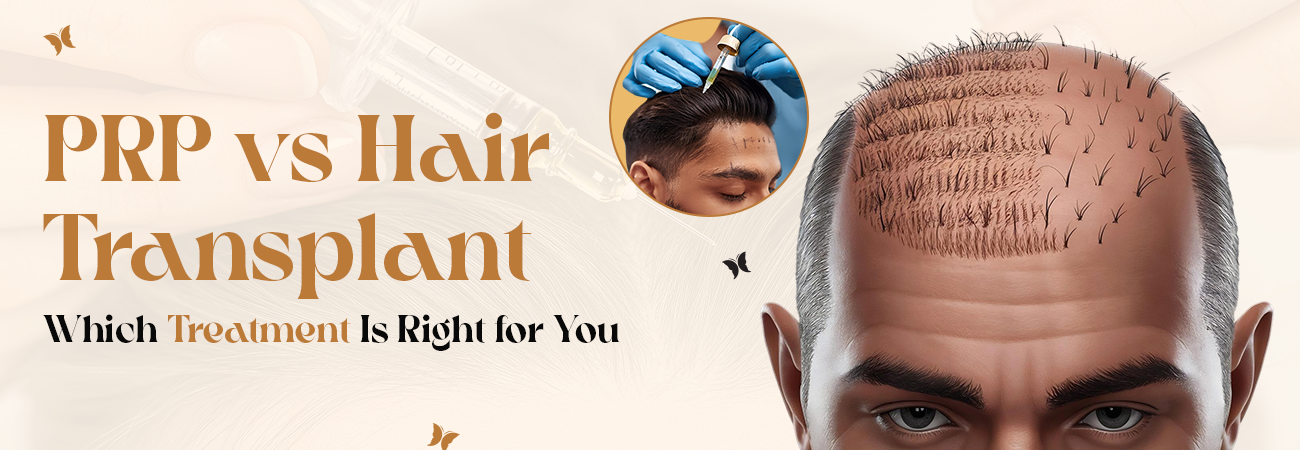
PRP vs Hair Transplant: Which Treatment Is Right for You
Publish Date: 31/12/2025
Hair loss is a concern that affects both men and women at different stages of life. From early thinning and excessive hair fall to visible bald patches, the reasons can vary from genetics, hormonal changes, stress, nutritional deficiencies, or lifestyle factors. With advancements in dermatology, effective treatments are now available to manage and even reverse hair loss when addressed at the right time properly at Expert Skin and Hair Clinic, the best hair clinic in Sainikpuri.
Among the most commonly discussed treatments today are PRP (Platelet-Rich Plasma) therapy and hair transplant surgery. While both aim to restore hair, they work in very different ways and are suitable for different stages of hair loss. Understanding the difference can help you make a confident and informed decision.
Understanding PRP Therapy for Hair Loss
PRP therapy is a non-surgical, medically proven treatment that uses the healing properties of your own blood to stimulate hair growth.
In this procedure, a small amount of blood is drawn and processed to extract platelet-rich plasma. This plasma contains powerful growth factors that help repair tissues, improve blood circulation, and activate weak or dormant hair follicles. The PRP is then carefully injected into the scalp in areas experiencing thinning or hair fall.
What makes PRP highly effective is its ability to work at the root level. It improves the health of existing follicles, strengthens weak hair, and encourages natural regrowth. Since it uses the body’s own cells, it is extremely safe and well-tolerated.
- Early-stage hair loss
- Diffuse thinning in men and women
- Hormonal or stress-related hair fall
- Weak, brittle hair
- Slowing down progressive hair loss
Clinical studies have shown that PRP improves hair density, thickness, and overall scalp health when done in multiple sessions under medical supervision.
How PRP Helps Restore Hair Naturally
PRP works by stimulating the body’s natural healing process. The growth factors present in platelets help:
- Increase blood supply to hair follicles
- Prolong the growth phase of hair
- Reduce hair shedding
- Improve follicle strength
- Enhance scalp health
Unlike cosmetic treatments that only mask hair loss, PRP therapy works at a cellular level, making it a preferred option for patients looking for a natural and non-surgical solution.
Understanding Hair Transplant Surgery
A hair transplant is a surgical procedure in which hair follicles are taken from a donor area and implanted into bald or thinning areas. It is generally recommended for individuals who have significant hair loss or bald patches where hair follicles are no longer active.
- Local anesthesia
- Healing time
- Post-procedure care
- Temporary redness or scabbing
While hair transplants provide visible and long-lasting results, they are usually advised only when hair loss has progressed beyond the stage where PRP can be effective on its own.
Why PRP Is Often the First Recommended Treatment
- Helps preserve existing hair
- Slows down further hair loss
- Improves hair thickness and quality
- Has no surgical risks
- Requires minimal downtime
- Can delay or prevent the need for a hair transplant
For patients in the early to moderate stages of hair loss, PRP can deliver excellent results when done consistently.
Can PRP Replace a Hair Transplant?
PRP cannot replace a hair transplant in cases of complete baldness, as it works only on existing hair follicles. However, it can significantly improve hair quality and density in thinning areas.
- Improve graft survival
- Speed up healing
- Enhance overall hair growth
- Strengthen surrounding hair
What to Expect from PRP Treatment
PRP sessions are quick and typically completed within 30–45 minutes. Patients can return to daily activities the same day.
- 3 to 6 initial sessions (3–4 weeks apart)
- Maintenance sessions every 6–12 months
Visible improvement usually begins after 3–4 months, with continued progress over time.
Is PRP Safe?
Yes. PRP is considered extremely safe because it uses your own blood components. Side effects, if any, are mild and temporary such as slight redness or tenderness.
Who Is an Ideal Candidate for PRP?
- Early or moderate hair thinning
- Ongoing hair fall
- Looking for a non-surgical solution
- Want to delay or avoid hair transplant
Conclusion
Choosing between PRP and hair transplant depends on your stage of hair loss and expectations. While hair transplant is a permanent solution for advanced baldness, PRP remains one of the most effective, safe, and natural treatments for early hair loss.
Early intervention with PRP can make a significant difference in preserving and strengthening your hair.
FAQs
1. What is PRP treatment for hair loss?
PRP is a non-surgical hair restoration treatment that uses your own blood to stimulate natural hair growth.
2. Is PRP better than a hair transplant?
PRP is ideal for early to moderate hair loss, while transplant is recommended for advanced baldness.
3. How many PRP sessions are required?
Typically 3–6 initial sessions followed by maintenance once or twice a year.
4. When will I see results?
Hair fall reduction may begin in 1–2 months, with visible density improvement after 3–4 months.
5. Is PRP painful?
Mild discomfort may occur during injections, but the procedure is generally well tolerated.